2026 NBA Draft: Competition Adjusted Performance
Applying trends in performance against top competition to 2026 prospects

Introduction
How does performance change against top competition, and which prospects rise to the occasion? In an attempt to try to answer these questions, I compiled even more Bart Torvik data this past season based on player performance against primarily top 100 teams. Through this project, I was not expecting to find the filter that uncovers hidden gems of prospects, but rather a filter that reveals fragile weaknesses and a player’s true strengths. To a certain extent, I feel that my expectations were met.
Below, I will dive into the two spreadsheets that the majority of my analysis stems from before diving into four 2026 prospects’ profiles. Please excuse the mention of any prospects who may have pulled out of the draft recently, as I did write this before the final deadline.
Top 100 Sheet
My top 100 sheet is composed of season-by-season player data against top 100 teams for drafted players since 2008. As non-conference play can be riddled with high-major teams taking on some of the worst teams in the country for “tune-ups”, prospects' numbers are bound to receive a bit of a buffer. Even the worst NBA team that these players face will be better than any of their competition in college, so there are lots of reasons to question the validity of production fueled by games against the bottom 2/3 of college basketball.
Looking to summarize the data, I only considered players who played 10 or more games in a season against top-100 competition. This left us with 846 guard seasons, 761 wing seasons, and 618 big seasons considered for the summary statistics. Relative to these outputs, there are some clear standouts and underperformers in this year’s class. I will discuss these standouts a bit later, but for now, the chart below lists a few players who have underperformed in certain categories relative to positional averages against t100 teams.

Competition Rise/Fall Sheet
My competition rise/fall sheet aims to measure the potential buffer mentioned in my top 100 sheet description. By calculating the difference between a player’s overall numbers and numbers against top 100 competition, one can identify potentially fragile points in a prospect’s game, as well as key strengths. A drop-off over a smaller sample can be circumstantial, but repeated struggles in certain areas may be signs of serious deficiencies.
To no surprise, I found there to be a drop in production across almost all categories. The tables below depict the average changes across all players, regardless of role, for certain rate statistics.


With this in mind, we should essentially expect a marginal drop as a baseline. It’s like basketball consumption to desire a rise in performance against better teams, but the reality is that just maintaining production is still above average. Consequently, the players who have maintained or improved their performance stand out amongst the rest. Below will be some profiles on four players that fit this mold.
2026 Standouts
Zuby Ejiofor
In all 3 seasons of real minutes in Zuby Ejiofor’s career, he’s risen to the occasion against the best competition. Looking first at BPM, Zuby’s has been +2, +1.6, and +1 against top 100 competition relative to his season BPM in three years. In the same span, his BPM against top 50 competition has been +3.5, +3.4, and +0.8 relative to his season BPMs. Looking back at the charts from above, we know that a rise of this magnitude (especially in 3 seasons) is anything but normal.
One would expect that these jumps would be due to a rise in rebounding or defensive playmaking, categories dominated by 6’9 bigs like Zuby. However, the rise actually uncovers what may be an outlier skill for a player of his stature. In all three years, Zuby rose his assist percentage and dropped his turnover percentage simultaneously against both top 50 and top 100 competition. This past season, Ejiofor hit his peak form, with him being one of just two players taller than 6’5 to hit his AST% and TO% marks of 24.8% and 14.8% against top 100 teams (minimum 10 games). What’s more is that amidst this increase in creation load on the offensive end, Ejiofor’s scoring efficiency never truly wavered. Zuby was truly proficient across the board against the best of the best.
Overall, Zuby’s flourishing against top competition revealed the validity of his passing skills and turnover management. With his rebounding and defensive playmaking already at high levels as well, he stands as one of the most skilled players at his size or larger in this year’s draft. The jumper remains a bit of a question, making Zuby likely position-locked as an undersized 4 (6’7.5’’ with 7’2’’ WS). However, his abundance of ancillary skills raises his floor and will help his ability to contribute to positive lineups in the league.
Tyler Tanner
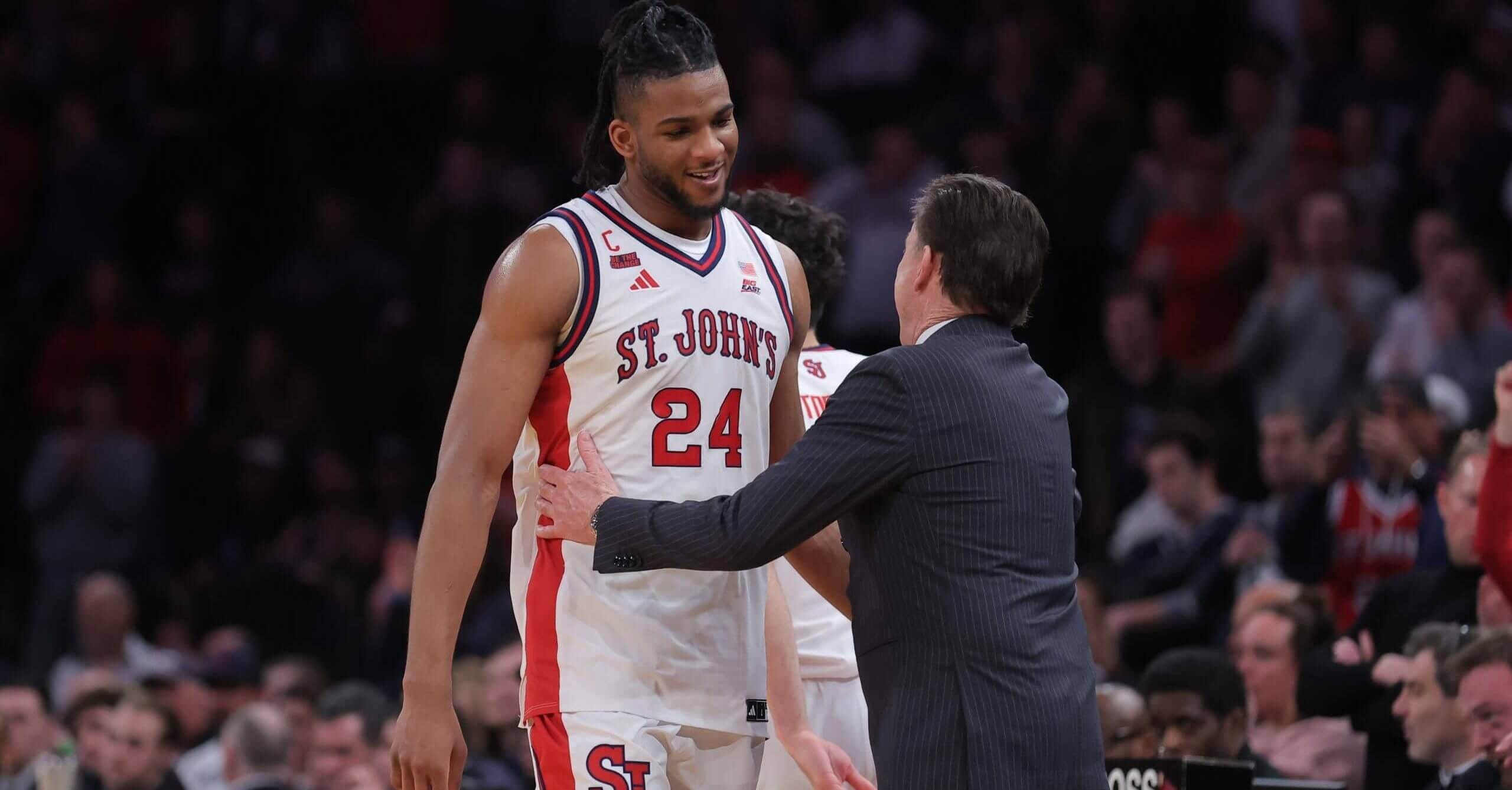
Tyler Tanner has long been one of my favorite prospects in the draft purely as a fan of the game. Even with limitations in size and weight, he displays tremendous feel on both ends of the floor against consistently fierce competition. While his freshman year saw him struggle in these big moments as a scaled-down off-ball guard, he came into his own this past year as the lead handler on one of the best teams in Vanderbilt history.
Tanner’s performance against top 100 competition this year epitomized what it means to be a floor general. His AST% of 29.3% and TO% of just 11.9% display the immensely positive influence he had on the team offense in both scoring efficiency and turnover management. Meanwhile, his composite statistic marks of an 11.4 BPM and 6.6 PRPG against t100 were only reached by two others in college basketball. I discussed BPM in my previous article, but for those who are unfamiliar with PRPG!, it’s a lengthy acronym that stands for points over replacement per adjusted game at that usage. In short, the measure is an estimate of how many more points per game one creates relative to a “replacement level” player. Torvik then adjusts this raw measure relative to one’s usage, as it’s undoubtedly harder to be more efficient at high usage than at lower usage.
I previously mentioned my fandom for Tanner coming from his two-way ability, and this is where he separates himself from other prospects. While his passing and turnover marks against t100 were reached by two other guards in this class, he’s in another stratosphere defensively. With a staggering STL% of 3.8% against t100, no other lead guard compares to this intersection of turnover management on offense and turnover creation on defense. Tanner, overall, is a player who plays bigger than his size, both due to his supreme cognition and impressive athleticism, which bleeds through to his scoring. He was a 63.5% rim finisher against t100 with 9 dunks, and had a free throw rate of 48.7%, where he converted on 85.3% of his attempts.
Only one clear downside emerges from Tanner’s profile, but it’s major: he’s small. Measuring in at 5’10.75” 167lbs with a 6’4.25” wingspan, he was both the 2nd shortest and lightest player at this year’s combine. A large part of me wants to ignore these numbers because of his proven ability to play “bigger”, but history isn’t too kind to players of this stature. As of just recently, Tanner has decided to return to school for his junior year, a decision I’m not too surprised by. While it’s unlikely for him to undergo a growth spurt before the 2027 draft, I think maintaining his production with added weight may help me lean a bit more optimistically next cycle. Tyler very well could be the next outlier, but any team that takes him will have to accept that risk.
Ugonna Onyenso
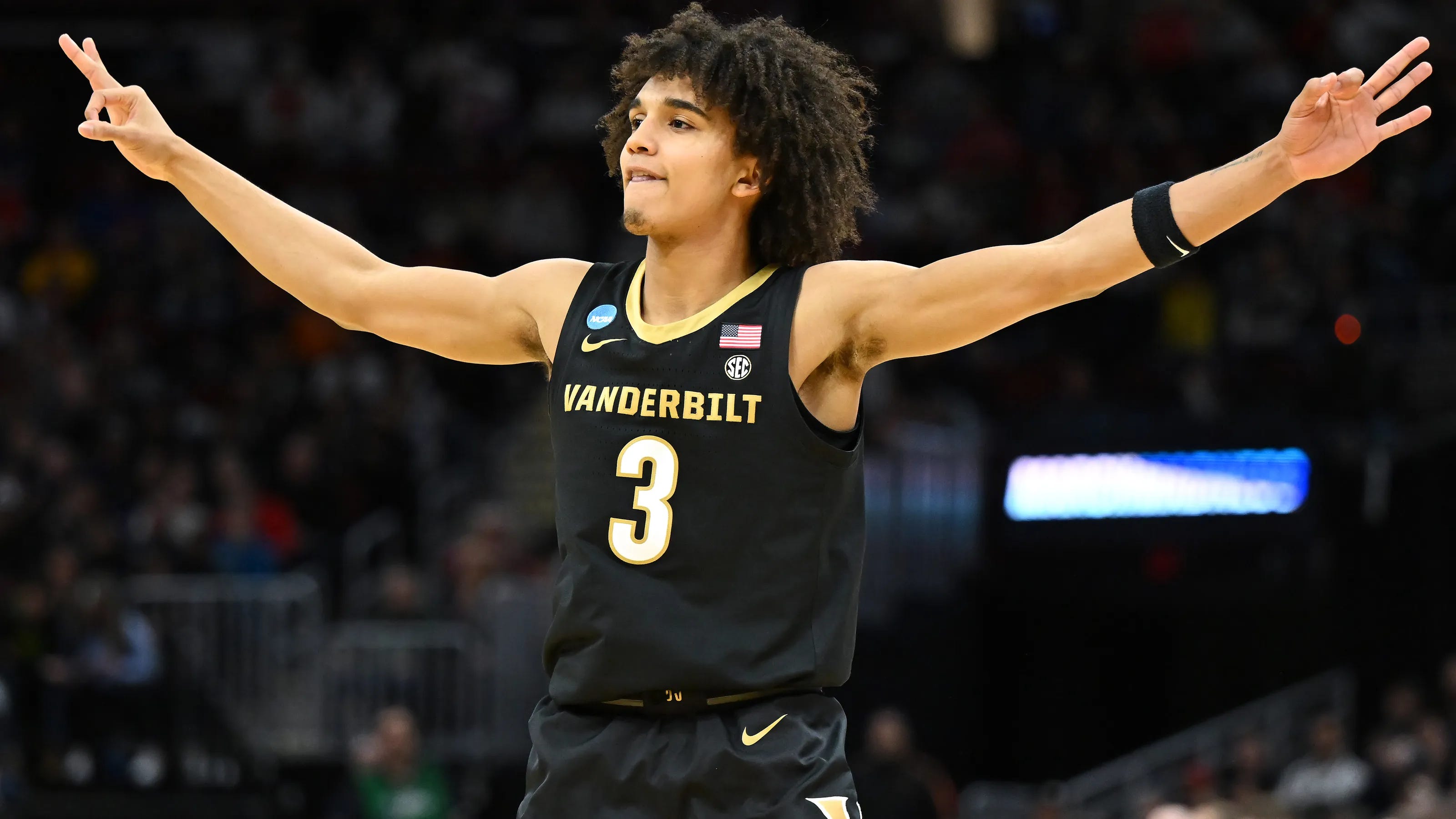
Ugonna Onyenso’s career is a puzzling one to say the least. Tallying a measly 27.1% of team minutes over four seasons, his skill and production never appeared to be the issue. His freshman season saw him step onto a crowded Kentucky roster that featured former national player of the year Oscar Tshiebwe and forward Jacob Toppin. His sophomore season appeared to be his chance, but an injury in the summer would force him to miss the first 9 games of the year and not get into a groove until the season’s end. Then, upon transferring to Kansas State, he’d again be bumped down the rotation by forwards Coleman Hawkins and David N’Guessan. Virginia would be the final stop, and it serves as the stop that discovered how to weaponize his outlier skill even with other talented front court pieces.
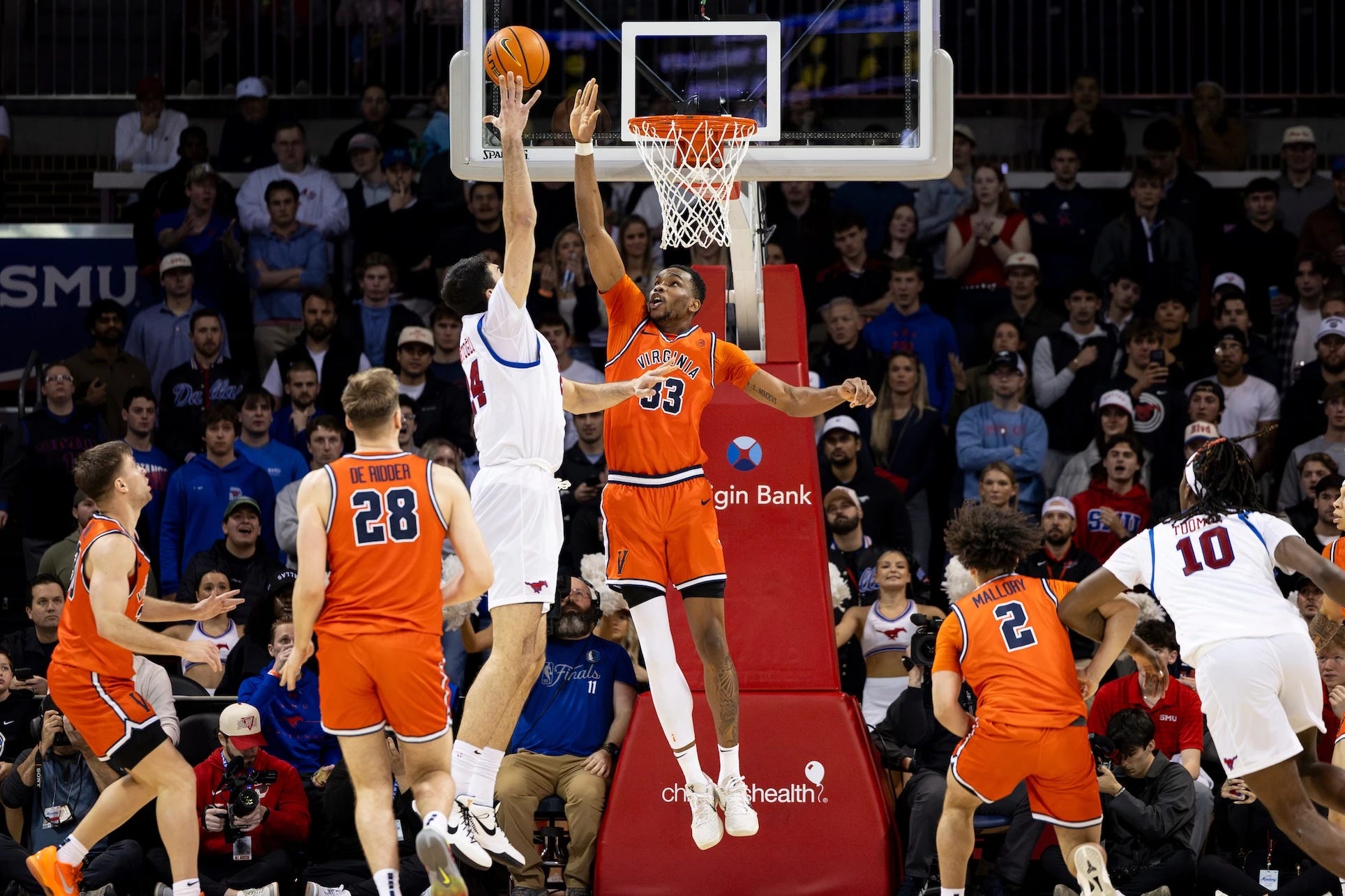
Playing 45.7% of his team’s minutes this season, Ugonna was the most productive rim protector in the country. His BLK% of 17.4% was the best in the country to begin with, and this mark somehow shot up to 18% in 23 games against top 100 competition. He supported his rim deterrence with further defensive playmaking through a STL% of 2.1% against t100 and quality production on the offensive and defensive glass. What appeared to be the question mark at previous spots was the trade-off between this absurd defensive talent and the lack of offensive tools. Virginia found his utility through an extremely low usage role where Onyenso’s mobility and length were leveraged to make him an active screener and play finisher. Nothing he did on this end was flashy, but he had a TO% of just 5.4% and finished 69% at the rim against top 100 competition. Simply put, he did his job, and even with it being a small role, it became worth it due to his defensive contributions. You just don’t see players reach an 8 defensive BPM en route to a 12.9 BPM against top 100 competition. It’s the highest defensive BPM mark I have in my database of drafted players and signals Onyenso’s season as one of the better defensive seasons in recent memory.
Even with this season being Ugonna’s far-and-away most productive year, it’s not an exaggeration to say he’s been the best rim protector on every team he’s been on. While more seasoned talent certainly existed beside him at Kentucky and Kansas State, neither spot possessed this sort of rim deterrence in those positions. This imprint can be seen when comparing his sophomore and senior seasons, where he saw real rotation minutes against his freshman and junior seasons, where he did not. His sophomore and senior BLK%’s of 15.4% and 17.4% led to the number one and two shot blocking defenses in the country, respectively. Meanwhile, his freshman and junior seasons saw his squads come in at 102 and 180 in BLK%, showing the sort of weight he could pull with the right opportunity. With all of this in mind, I’m firm on Onyenso being an NBA-level rim protector. His measurements of 6’11 237lbs with a 7’4.75” wingspan back up the tools seen through stats and film, and the consistent emergence of these skills independent of role or competition are encouraging. The offense is certainly raw, but I have to think there’s a team out there looking for a player with this level of defensive influence.
Ebuka Okorie
Ebuka Okorie has been a steady riser for me as the draft cycle has gone on, and it baffles me how little coverage he’s gotten compared to other freshmen. While Ebuka was just a fringe top 100 recruit with Stanford as his only major offer, he comfortably owns one of the better guard profiles in the draft. Early on, he caught eyes for his scoring, reaching 22.8 points per game through non-conference play. However, as the season went on, he showed himself to be much more than a scorer.
Okorie is a skilled floor general in all facets, primarily standing out as one of the most turnover-averse guards in this year’s draft. Being relied on heavily with a usage of 30.1 this season, he managed a turnover percentage of just 10.4%, an intersection reached by only two other high-major players this season. Even in 18 games against t100, his turnover percentage stayed the same while his usage rose to 31.4. Nevertheless, a common question surrounding his profile is his passing volume in tandem with his turnover management. With a season AST% of just 23.9%, 71st percentile among drafted guards since 2010, his production doesn’t signal an NBA lead guard to the naked eye. However, his tape and end-of-season performances lead me to believe he has the necessary passing chops. His AST% shot up to 26.7% against t100 teams, an area where he was already shown to shoulder more usage and sustain turnover aversion. Furthermore, Okorie’s film clearly displays an ability to make proper reads and necessary passes. Even as his turnovers were low, many of them came from errant passes, showing his willingness to take risks. Stanford was clearly lacking in talent outside of Ebuka, and it was bound to affect his passing volume as a result. User “DBCJason” on X outlined this in a recent tweet as he showed that despite a player labeled as an elite passer like Cam Boozer averaging nearly double the volume of rim assists Okorie did, they were responsible for the same percentage of their team’s rim makes. His passing volume was never necessarily bad, but it was at the mercy of the less talented players around him. With Ebuka bound to see more talented bigs on his next roster, I think his control of the turnover economy will only stand out more as his passing reads are rewarded.
The burden carried by Ebuka showed in his scoring profile, which was one of the most self-created in the country. Just 20.5% of his baskets across three levels were assisted, the lowest percentage amongst high major guards with at least 400 field goal attempts. He has tremendous burst en route to the rim and never shies away from contact, but problems emerge when looking at his finishing. His FG% at the rim was just 53.4% against t100 teams, a mark that is not abhorrent considering age and overall creation load, but certainly something to take note of. Looking towards his shooting production and overall projection, I believe it’s quite underrated. Similar to a player like Bennett Stirtz, the majority of Ebuka’s jumper volume came off the dribble and in contested scenarios, making them inevitably more difficult. Therefore, his ability to still shoot 35.4% from three this season, paired with already elite free-throw touch at 83.2%, becomes a lot more impressive. What’s more is that these numbers trended up during conference play, as he shot 37.5% from three and 84.8% at the line. Overall, this may be one of the five best shooters in the class when factoring in the element of self-creation.
On a team with an average BPM of just 2.6 across its rotation, Ebuka Okorie stood out with a 9.6 (9.4 vs t100) and a masterful freshman season. Many may question his viability as he fueled his team to middle-of-the-pack efficiency, but I believe Okorie was what kept Stanford’s head above water. He’s tremendously talented as a self-created scorer, and I think the perception of his playmaking will continue to change with better infrastructure. I haven’t finalized my ranking of him quite yet, but he may have a lottery grade for me when it’s all said and done.